



Contents
upcoach is a program delivery platform built for people who build, sell, and run structured programs. But not every platform works for every business. Maybe you need heavier course-building tools, or a marketplace with built-in distribution, or a WordPress plugin that fits your existing site.
This guide breaks down 13 alternatives to upcoach, organized by what each platform does best. We compare features, pricing, and the types of programs each one supports so you can pick the right fit.
Quick comparison: upcoach vs. alternatives at a glance
Before we get into individual platforms, here’s how they stack up across the features that matter most for running programs:
| Platform | Best For | Structured Programs | Accountability Tools | Built-in Community | Starting Price |
|---|---|---|---|---|---|
| upcoach | Program delivery | Yes | Yes | Yes | $49/mo |
| Kajabi | Selling courses | Partial | No | Partial | $55/mo |
| Mighty Networks | Community building | Partial | No | Yes | $99/mo |
| Coachable | Coach development | No | Partial | No | Contact sales |
| LearnWorlds | Interactive courses | Partial | No | Partial | $24/mo |
| LearnDash | WordPress users | Partial | No | No | $199/yr |
| Circle | Online communities | No | No | Yes | $49/mo |
| Teachery | Simple course sales | No | No | No | $49/mo |
| FreshLearn | Course + marketing | Partial | No | Partial | $29/mo |
| Udemy | Marketplace reach | No | No | No | Revenue share |
| Thinkific | Course creation | Partial | No | Partial | $36/mo |
| Podia | Digital products | No | No | Partial | $33/mo |
| Ruzuku | Simple courses | No | No | No | $99/mo |
| Systeme | Marketing funnels | No | No | No | $27/mo |
The biggest differentiator: most alternatives are built around content (courses, videos, downloads) or community (forums, feeds, events). upcoach is built around the program, where structured delivery, participant progress tracking, and accountability come first.
Course platforms (built for selling content)
These platforms are strong at creating and selling online courses. They work well if your business is content-first. If you’re running structured programs where participant follow-through matters, they’ll feel like they’re missing pieces.
1. Kajabi
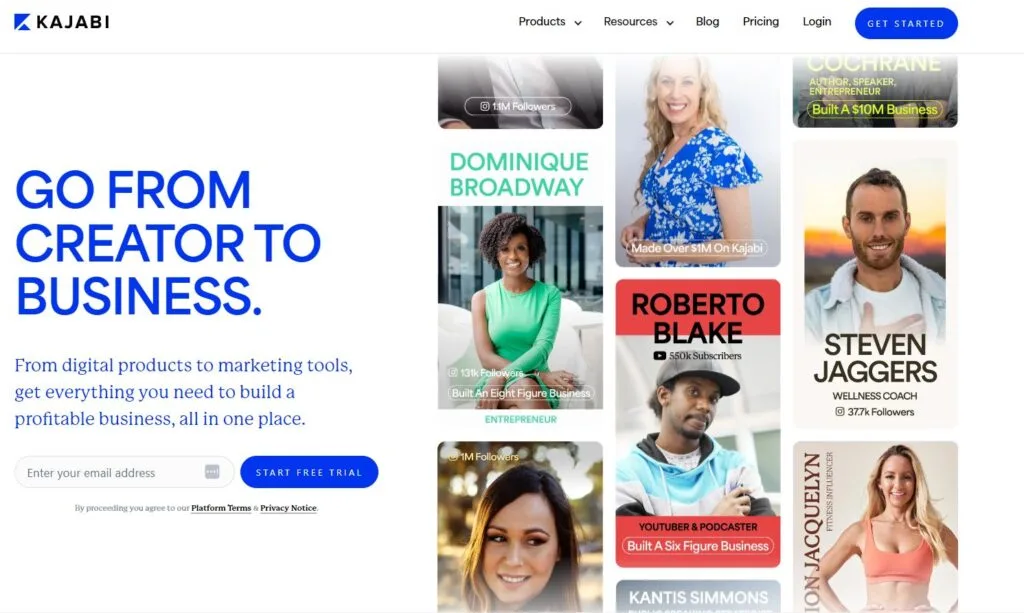
Kajabi is a popular all-in-one platform for creating and selling online courses. It bundles course building, email marketing, landing pages, and sales funnels into one tool.
What it does well:
- Strong course builder with video hosting, quizzes, and assignments
- Built-in email marketing and sales funnel tools
- Kajabi added cohort-based courses in late 2025
- Creator Studio with AI-powered content creation (integrated with Adobe Express)
- Landing page builder for marketing and lead generation
Where it falls short:
- No accountability tracking or participant progress dashboards
- Community features exist but are secondary to content delivery
- Pricing is higher than most alternatives, starting at $55/month
- Can feel complex for people who just need to run a program, not build a marketing machine
Best for: People who sell self-paced courses and want marketing tools built in.
Pricing: Starts at $55/month.
| Feature | Kajabi | upcoach |
|---|---|---|
| Course creation | Strong | Yes |
| Structured programs | Partial (no accountability) | Yes (12 program types) |
| Progress tracking | Completion only | Section-level + per-participant |
| Built-in community | Partial | Yes (channels, threads, DMs) |
| Sales funnels | Yes | No (focused on delivery) |
| Best for | Content businesses | Program businesses |
2. LearnWorlds
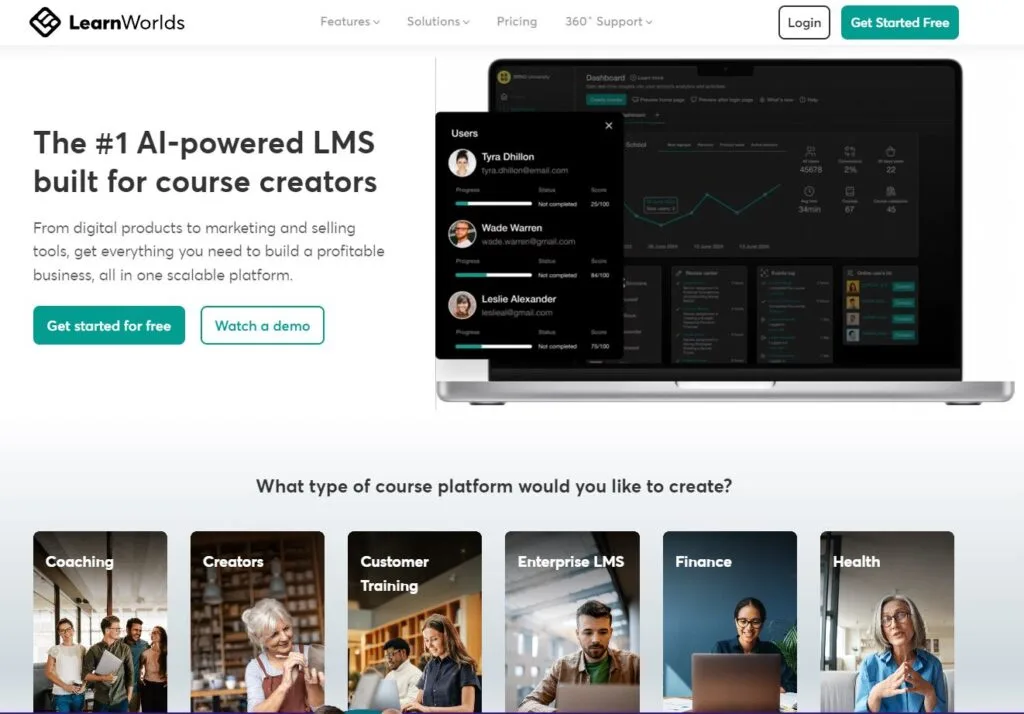
LearnWorlds is built for creating interactive online courses with strong engagement features.
What it does well:
- Multiple content types: videos, ebooks, assessments, certificates, surveys
- Hundreds of templates to get started quickly
- Branded mobile app option so participants can access content anywhere
- Good analytics for course completion and engagement
Where it falls short:
- No structured program delivery (courses are the central object, not programs)
- No accountability or follow-through tools
- Advanced features require higher-tier pricing
Best for: Course creators who want interactive, media-rich learning experiences.
Pricing: Starts at $24/month.
3. LearnDash
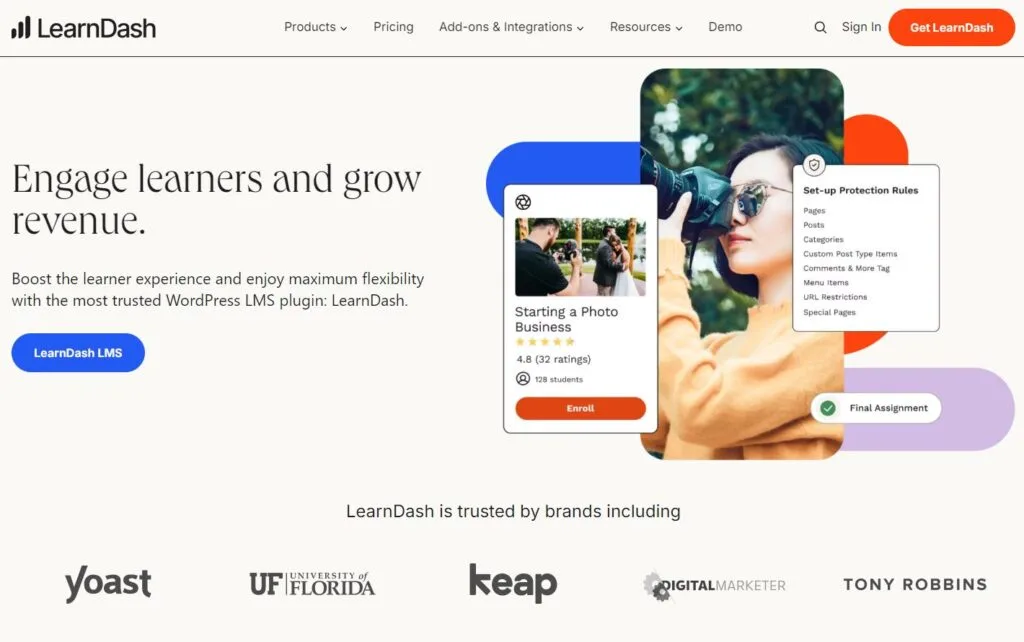
LearnDash is a WordPress plugin for creating and selling online courses. If you already have a WordPress site, it plugs right in.
What it does well:
- Deep WordPress integration with high customization
- Course structuring tools including quizzes, assignments, and drip content
- Can monetize any content type (blogs, podcasts, premium content)
Where it falls short:
- Requires technical knowledge for setup and ongoing maintenance
- No built-in community or accountability features
- You’re managing a WordPress plugin, not a purpose-built platform
Best for: WordPress users who want to add courses to an existing site.
Pricing: Starts at $199/year.
4. Teachery
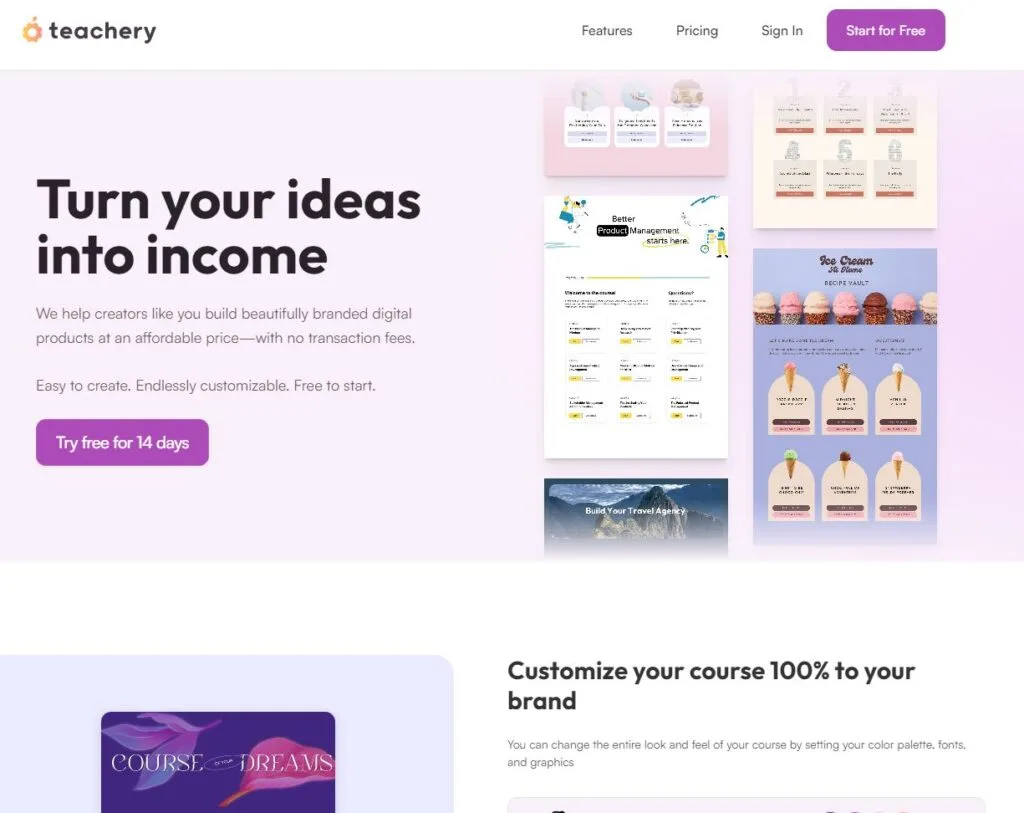
Teachery keeps things simple. It’s a straightforward platform for building and selling online courses without the complexity of larger tools.
What it does well:
- Clean course builder with embedded videos, images, slideshows, and quizzes
- Customization for brand alignment (fonts, CSS, color palettes)
- Flexible payment pages with upselling, bundling, and promo codes
Where it falls short:
- Limited features for anything beyond basic course delivery
- No community, no accountability, no progress tracking
- No structured program support
Best for: Solo creators who want a simple, affordable way to sell courses.
Pricing: Starts at $49/month.
5. FreshLearn
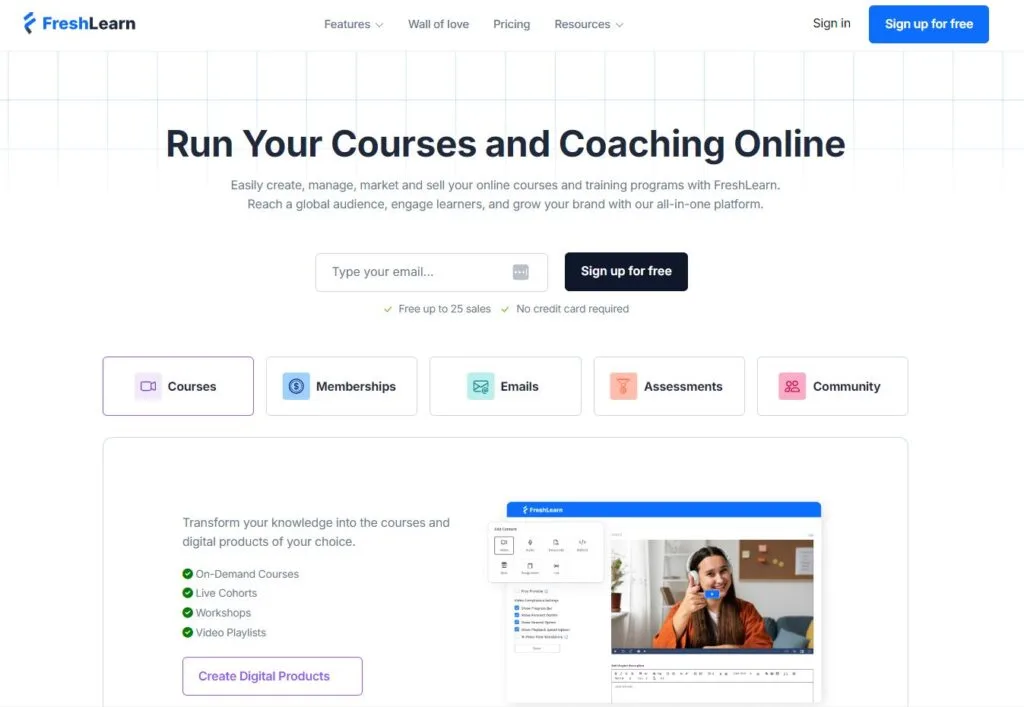
FreshLearn is an all-in-one platform for courses, digital products, and membership sites with built-in marketing tools.
What it does well:
- Course creation plus digital product and membership site tools
- Drag-and-drop email builder with automation workflows
- Custom assessments with multiple answer types
- 24/7 live chat support
Where it falls short:
- Better suited for organizations than individual program creators
- No structured program delivery or accountability tracking
- Community features are limited compared to dedicated platforms
Best for: Small teams that want course creation and email marketing in one place.
Pricing: Starts at $29/month.
6. Udemy
Udemy is a course marketplace with millions of active learners. You get distribution, but you give up control.
What it does well:
- Massive built-in audience (millions of active learners)
- No upfront cost to publish
- Potential for passive income at scale
Where it falls short:
- High competition makes visibility difficult
- Udemy controls pricing during promotions (your $199 course might sell for $12.99)
- No community, no accountability, no participant relationships
- You don’t own your audience
Best for: People who want marketplace distribution and don’t need direct participant relationships.
Pricing: Revenue share model (instructor fee per sale).
Community platforms (built for engagement)
These platforms are strong at building online communities. They work well if engagement is your primary product. If you need structured program delivery on top of community, you’ll need to bolt on other tools or accept the gaps.
7. Mighty Networks
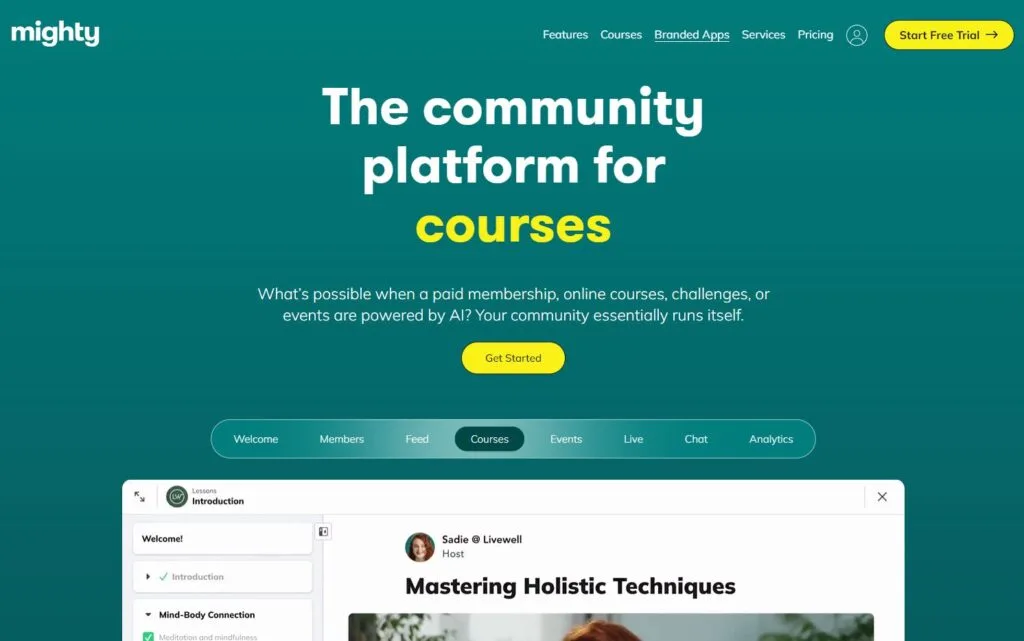
Mighty Networks is built around community. It’s a good fit if your business model centers on member engagement, live events, and group interaction.
What it does well:
- Strong community features: forums, live events, gamification
- Customizable spaces for different purposes (courses, events, forums)
- Chat and messaging for member interaction
- Live streaming directly from the community feed (sessions can be recorded)
- Mighty Co-Host AI helps members find connections and generates conversation starters
Where it falls short:
- Course creation is secondary to community
- No structured program delivery, accountability, or outcome tracking
- Starting at $99/month, it’s pricier than many alternatives
Best for: Community-first businesses where engagement is the product.
Pricing: Starts at $99/month.
| Feature | Mighty Networks | upcoach |
|---|---|---|
| Community | Strong (core feature) | Yes (channels, threads, DMs) |
| Structured programs | No | Yes (12 program types) |
| Accountability | No | Yes (automated reminders, progress tracking) |
| Live events | Yes | Yes (with scheduling + feedback collection) |
| Best for | Community businesses | Program businesses |
8. Circle
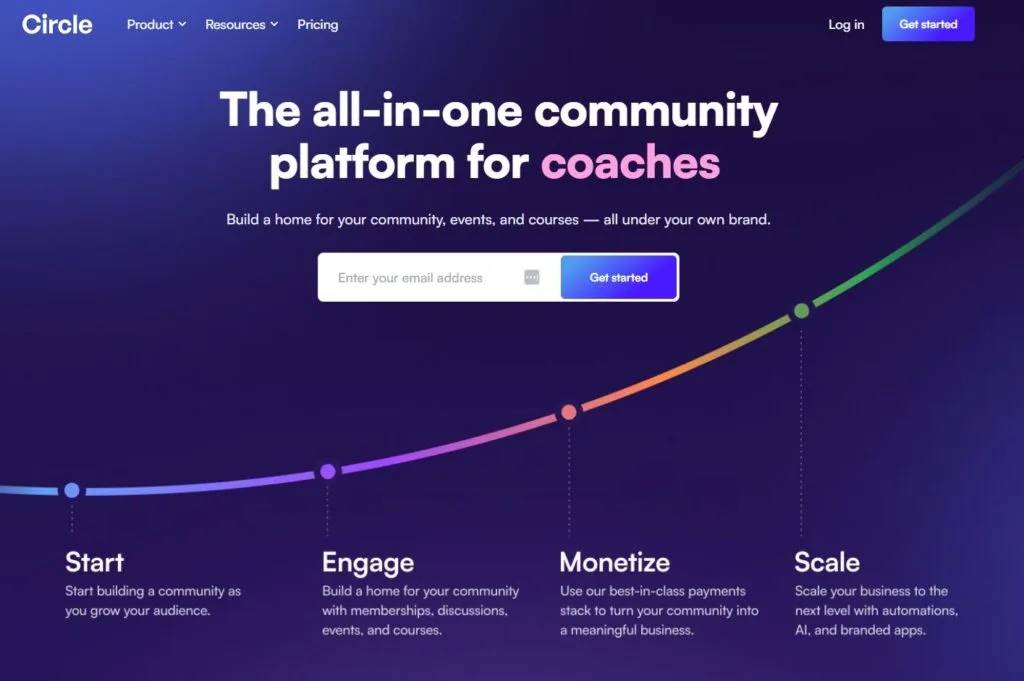
Circle is a focused community platform with some course features added on. Its strength is community building and member engagement.
What it does well:
- Purpose-built for community: private messaging, live events, forums
- Clean, modern interface that’s easy for members to use
- Management features including payment processing and access controls
- Engagement tools like polls, quizzes, and badges
Where it falls short:
- Course features are limited compared to dedicated course platforms
- No structured program delivery or accountability
- No participant progress tracking or outcome measurement
Best for: Creators and coaches who want a clean community space with light course features.
Pricing: Starts at $49/month.
Platforms with free plans or trials
These platforms offer free tiers or trials, making them easier to test before committing.
9. Thinkific
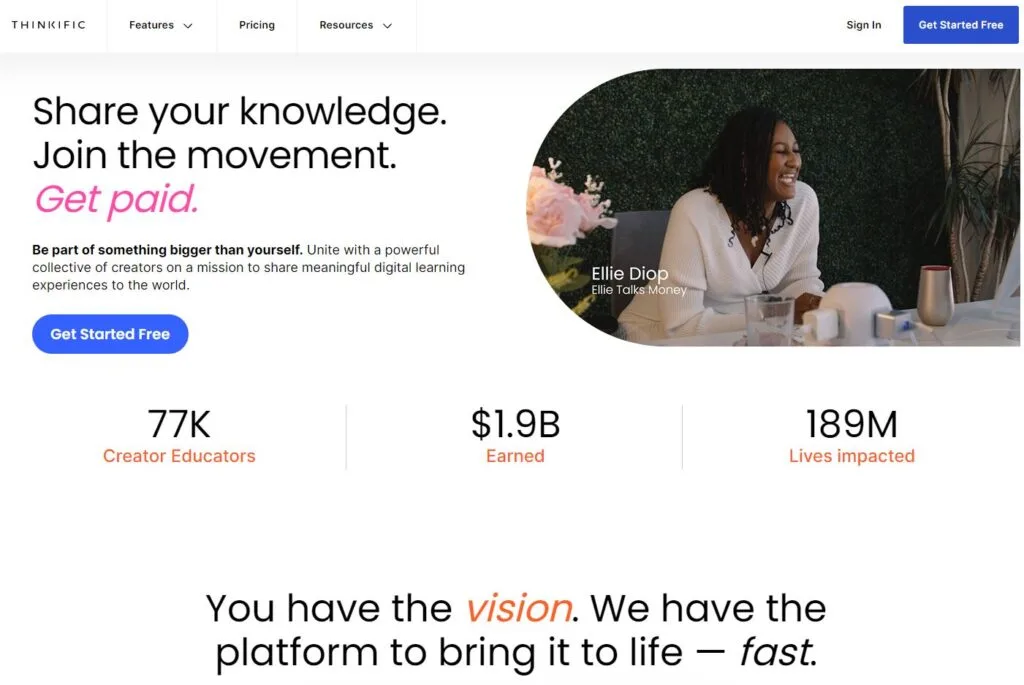
Thinkific is a solid choice for creating and selling online courses, especially if you’re not very technical. The platform is straightforward and covers the basics well.
What it does well:
- Course builder plus communities, digital downloads, and webinars
- Built-in email marketing, landing pages, and sales funnels
- Thinkific Academy teaches you how to market and sell courses
- Good for getting started without technical skills
Where it falls short:
- No structured program delivery or accountability tools
- Can get complex (and more expensive) as you need advanced features
- Community features are add-ons, not core to the platform
Best for: Non-technical course creators who want marketing tools included.
Pricing: Free trial available, paid tiers start at $36/month.
10. Podia
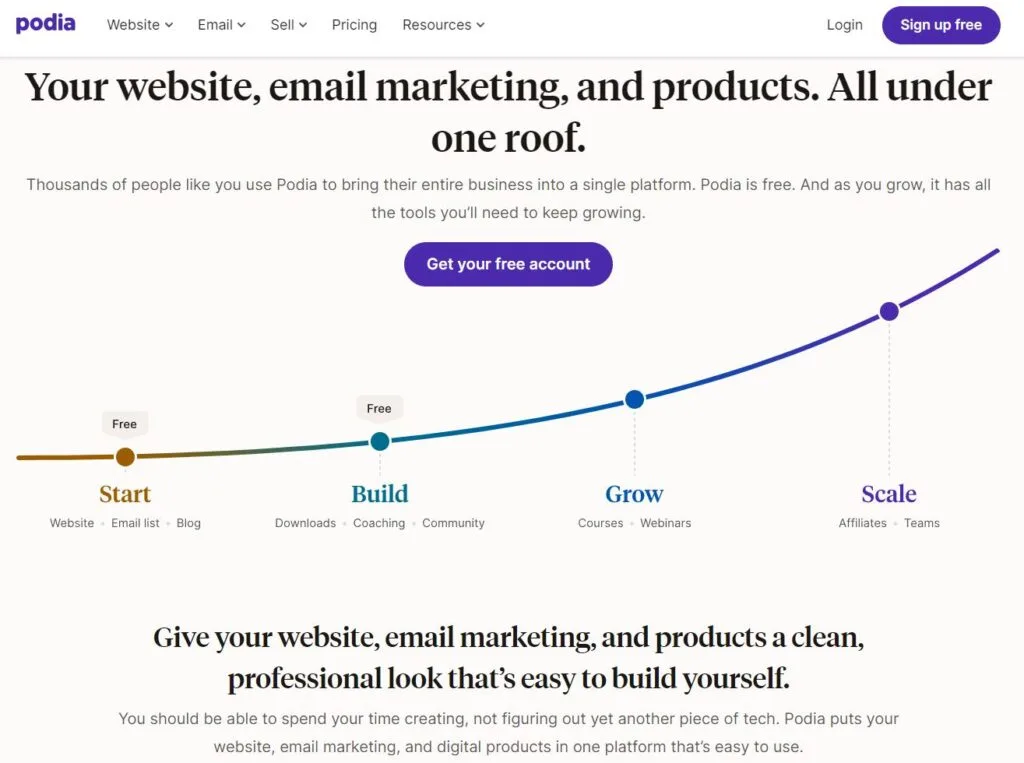
Podia is a simple platform for selling digital products. Its main selling point is simplicity.
What it does well:
- No-code website builder for quick setup
- Straightforward course builder with sales pages for digital products
- Built-in email marketing with list segmentation and automation triggers
- Clean, minimal interface
Where it falls short:
- Lacks advanced features for complex program creation
- No accountability, progress tracking, or structured delivery
- Community features are basic
Best for: Solo creators selling digital products who value simplicity over depth.
Pricing: Free plan available, paid tiers start at $33/month.
11. Ruzuku
Ruzuku focuses on making learning engaging. It’s a straightforward platform for educators who want to create courses without technical overhead.
What it does well:
- Easy to use, even without technical experience
- Multiple course formats: video, text, and live webinars
- Drip-feed content or release everything at once
- Host webinars directly in the platform
Where it falls short:
- Fewer features than most competitors on this list
- No community, no accountability, no structured program support
- Pricing is high ($99/month) relative to the feature set
Best for: Educators who want a simple, focused course tool.
Pricing: Free plan available, paid tiers start at $99/month.
12. Systeme
Systeme is an all-in-one marketing platform that also includes course creation. It’s a good pick if your primary need is sales funnels and email marketing, with courses as one piece of a larger marketing operation.
What it does well:
- Website builder, course creation, email marketing, sales funnels, and webinar hosting in one tool
- Business process automation
- Built-in affiliate marketing program
- Generous free plan
Where it falls short:
- Course and program features are secondary to marketing tools
- No community, accountability, or progress tracking
- Can be complex to set up for beginners
Best for: Marketers who want courses as part of a broader sales funnel.
Pricing: Free plan available, paid tiers start at $27/month.
Coach development (a different category)
13. Coachable
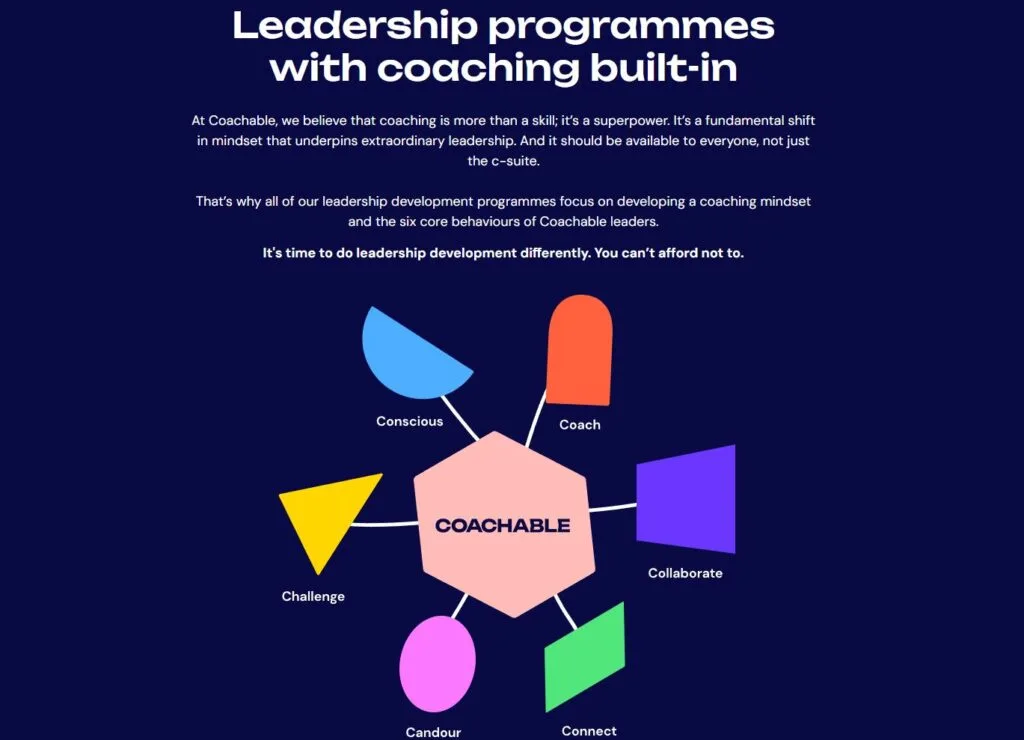
Coachable is different from the other platforms on this list. It’s not a tool for delivering programs to your participants. It’s a coaching development company that helps coaches improve their skills.
What it offers:
- Programs for coaches who want to grow as coaches and leaders
- 360-degree feedback tools for self-awareness
- Further, a 14-week development journey covering mindset, strategy, and implementation
Why it’s on this list: If you’re looking for an “upcoach alternative” because you want to become a better coach (not deliver programs), Coachable might be what you actually need. It’s not a competitor to upcoach; it solves a different problem.
Pricing: Contact their team for a quote.
How to choose the right platform
The right choice depends on what you’re actually building. Here’s a framework:
Choose a course platform (Kajabi, Thinkific, LearnWorlds) if your business model is creating content, selling access, and collecting payments. These are content businesses.
Choose a community platform (Circle, Mighty Networks) if engagement is your product. These work well for memberships where the value comes from peer interaction, events, and discussion.
Choose a marketing platform (Systeme, Podia) if your primary need is funnels, email marketing, and selling digital products, with courses as one piece.
Choose upcoach if you’re running structured programs where participant follow-through and results matter. If you’re delivering group coaching, masterminds, bootcamps, cohort courses, certifications, or transformation journeys, you need a platform where the program is the central object, not the course or the community.
When I started building upcoach, the gap was clear: every platform was built around content or community, but nobody was building around the program itself. The coaches and program creators I worked with kept cobbling together three or four tools to deliver one program. They’d use one tool for curriculum, another for community, a spreadsheet for tracking, and manual reminders for accountability. upcoach puts all of that in one place, with the program at the center.
Key questions to ask yourself:
- What’s my central deliverable? If it’s a course, pick a course platform. If it’s a program with structured outcomes, pick a program platform.
- Do I need accountability tools? If participant follow-through matters to your results (and your retention), make sure the platform supports it natively, not as an afterthought.
- What’s my coaching style? Some platforms fit group formats better, others are built for self-paced content.
- What’s my budget? Prices range from free to $199/month. More expensive doesn’t always mean better fit.
- Do I need integrations? If you already use specific tools for email, payments, or scheduling, check compatibility.
- Will it scale? Consider whether the platform can handle growth in participants, programs, and content.
Ready to build your first program?
If upcoach sounds like the right fit, try it free and create your first program in minutes. You’ll get structured program delivery, built-in community, accountability tools, and progress tracking, all in one platform.
Frequently asked questions
What makes upcoach different from course platforms like Kajabi or Thinkific?
Course platforms are built around content: create a course, sell access, track completion. upcoach is built around programs: structured journeys where participant accountability, progress tracking, and outcomes are the focus. If your business depends on participant results (not just content consumption), that’s the core difference.
Can I use upcoach alongside a community platform like Circle or Mighty Networks?
Yes. Some program creators use a community platform for broad engagement and upcoach for structured program delivery. They serve different purposes and can coexist. When engagement needs to turn into structured transformation with tracked outcomes, that’s where upcoach comes in.
Is upcoach only for coaches?
No. upcoach is used by anyone who builds, sells, and runs structured programs: consultants, trainers, course creators, agencies, facilitators, and training companies. The common thread is delivering programs where follow-through and results matter.
What types of programs can I run on upcoach?
upcoach supports 12 program formats: group coaching, masterminds, cohort-based courses, bootcamps, certification programs, challenges, transformation journeys, workshop series, 1:1 coaching, 1:1 programs, self-paced courses, and memberships. Each format has a guided setup with templates.
How does upcoach handle accountability?
upcoach has built-in accountability tools: automated reminders, section-level progress tracking, per-participant dashboards, and program reports that show who’s engaged and who needs attention. The notification system is designed around accountability first, not engagement metrics.

David is the CEO of upcoach and a serial entrepreneur. He's passionate about helping entrepreneurs and executives find success and harmony in business and in life.